We exist because every child in America deserves access to quality education — regardless of their zip code, family income, or the color of their skin.
According to the National Center for Education Statistics (NCES), approximately 11.6 million children in the United States live in poverty. In Georgia alone, 1 in 5 children lives in a food-insecure household, and the majority of students in Atlanta Public Schools qualify for free or reduced-price lunch — a primary indicator of economic hardship.
Research from the Brookings Institution shows that children from low-income families are 6 times less likely to graduate from college than their higher-income peers. The achievement gap begins as early as kindergarten and widens with each passing year without intervention. In Atlanta's historically underinvested neighborhoods — including Vine City, Bankhead, and Westside — school dropout rates exceed 30% in some corridors.
The evidence is clear: without targeted, sustained support, educational inequity perpetuates generational poverty. 18th and Spring Inc. was founded to interrupt that cycle.

"To empower underserved children in Atlanta and beyond by providing equitable access to education through scholarships, learning resources, and enrichment experiences — so that every child can discover their full potential."
We exist because the accident of birth should never determine the ceiling of a child's ambition.
By 2035, 18th and Spring Inc. will have directly served 10,000 children across Georgia, established a $2 million endowment for perpetual scholarships, and partnered with 50+ schools to embed our enrichment model into the standard curriculum.
We envision a Georgia where a child's educational outcome is determined by their effort and talent — not their family's bank account.
Our first three-year phase is defined by five measurable, time-bound objectives that build the organizational infrastructure and community trust needed for long-term impact.
Award a minimum of 150 scholarships annually by 2027, targeting K–12 students in Atlanta's five most underserved zip codes.
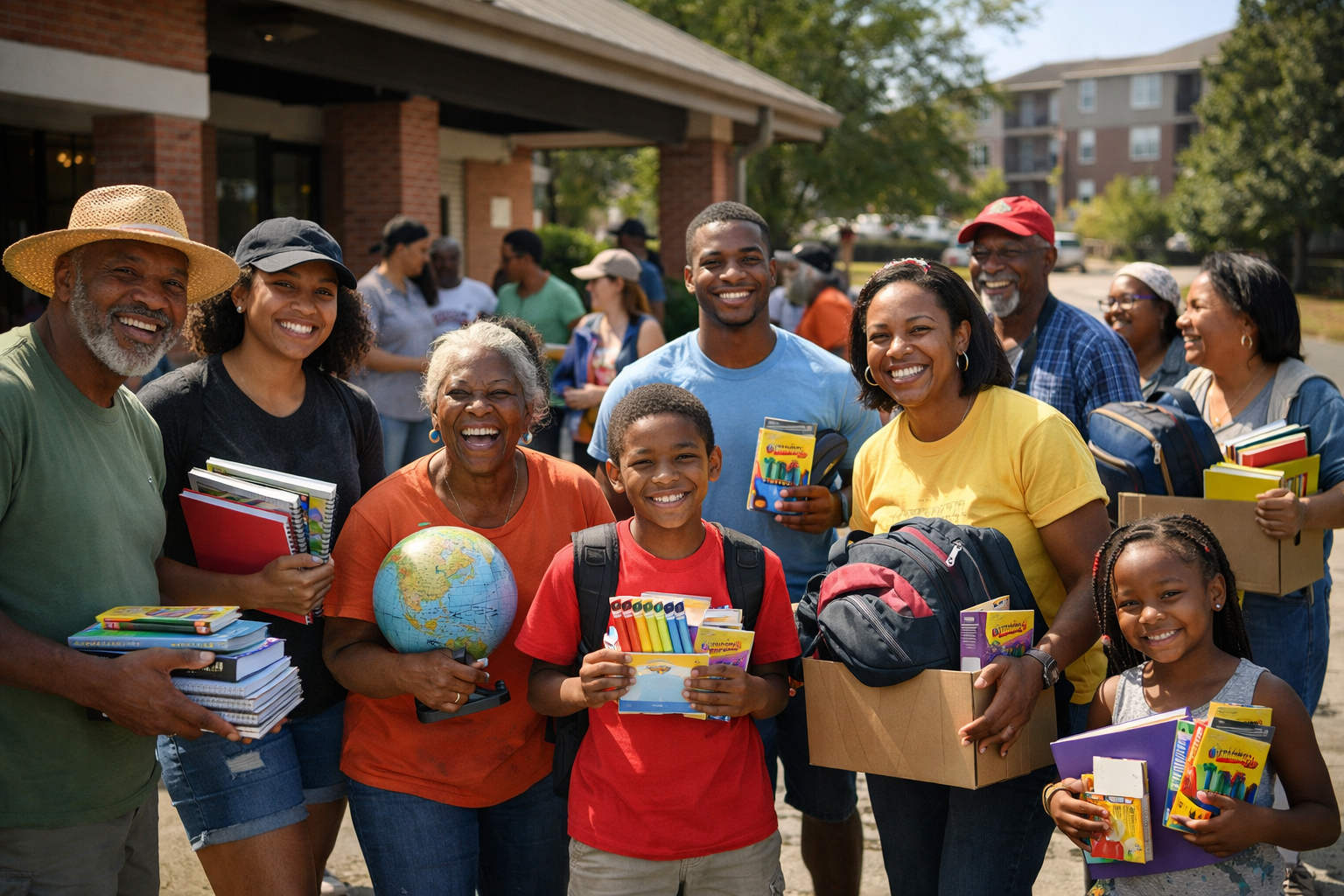
Distribute school supplies to 500+ students per semester, tracked via intake forms and post-distribution surveys with 90% completion rate.
Recruit and train 250 active volunteers by end of 2026, with a structured onboarding program and 70% annual retention rate.
Organize 20 educational field trips and STEM workshops per year, each aligned to Georgia state academic standards and evaluated for learning outcomes.
Achieve a diversified funding portfolio (no single source exceeding 30% of revenue) and a 6-month operating reserve by December 2027, reducing dependence on any single grant or donor.
Primary Beneficiaries: Children ages 5–18 living in households at or below 200% of the federal poverty line, enrolled in Title I public schools in Atlanta, GA. Selection criteria include demonstrated financial need, school enrollment verification, and geographic eligibility.
Secondary Beneficiaries: Parents and guardians of enrolled children, who receive parenting-for-literacy workshops and resource navigation support. Teachers and school counselors in partner schools also benefit through our co-facilitated supply drives and classroom resource grants.
Tertiary Impact: The broader Atlanta community benefits through reduced dropout rates, increased civic participation among youth alumni, and the economic multiplier effect of a more educated local workforce.
Early literacy and foundational skills support
Tutoring, mentorship, and enrichment
College prep, scholarships, campus tours
Our Theory of Change maps how resources and activities translate into lasting educational transformation.
Donor funding, volunteer time, corporate partnerships, school relationships, staff expertise
Scholarship awards, supply drives, tutoring, field trips, STEM workshops, college tours
Improved attendance, higher grades, increased school supplies, expanded aspirations
Higher graduation rates, college enrollment, career readiness, generational poverty reduction
Underlying assumption: Children who have their basic educational needs met and are exposed to enriching experiences develop the confidence and skills to pursue higher education and economic mobility.
Our M&E framework is built around a quarterly data collection cycle. We use intake surveys, post-program assessments, school report card reviews (with family consent), and annual beneficiary interviews to track progress against our KPIs.
Attendance logs, supply distribution tallies, scholarship disbursement records reviewed by Program Director.
Academic progress check-ins with scholarship recipients; parent satisfaction surveys; volunteer feedback forms.
Third-party evaluation of program outcomes, financial audit, and board review of strategic goal progress.
18th and Spring is led by a dedicated core team supported by a network of over 180 volunteers. Our organizational structure is designed for agility, accountability, and community trust.
Oversees organizational strategy, donor relations, and community partnerships. Brings 15+ years of nonprofit leadership experience in education equity.
Manages day-to-day program operations, volunteer coordination, and school partnerships. Former Atlanta Public Schools counselor with 12 years of experience.
Leads grant writing, corporate fundraising, and individual donor cultivation. Has secured over $500K in institutional grants since joining in 2023.
Volunteers are the lifeblood of our operations. Our three-phase volunteer strategy ensures that every person who joins our team is equipped, engaged, and retained:
We partner with local HBCUs, churches, corporate employee volunteer programs, and neighborhood associations to recruit diverse volunteers who reflect the communities we serve.
All volunteers complete a 4-hour orientation covering child safeguarding, cultural competency, program protocols, and trauma-informed communication.
Monthly volunteer spotlights, annual appreciation events, leadership pathways to Team Lead roles, and flexible scheduling to accommodate working adults.
We employ a diversified funding model to ensure long-term financial resilience. No single revenue source exceeds 30% of our annual budget.
Our sustainability strategy rests on three pillars designed to ensure 18th and Spring thrives long after its founding phase:
We are actively building a restricted endowment fund, targeting $500K by 2027, with annual interest funding a permanent scholarship stream independent of operating revenue.
Multi-year MOU agreements with Atlanta Public Schools and three corporate sponsors provide predictable, recurring funding that reduces grant dependency.
By 2026, we will launch a fee-for-service consulting arm, offering our enrichment curriculum to private schools and corporations seeking community engagement programs.
We proactively identify and plan for the risks most likely to affect our ability to serve children. Below is our current risk register with mitigation strategies.
| Risk Category | Risk Description | Likelihood | Mitigation Strategy |
|---|---|---|---|
| Financial | Loss of a major grant or donor (>20% of revenue) | High | Diversified funding portfolio; 6-month operating reserve; monthly donor cultivation |
| Operational | Key staff departure (Executive Director or Program Director) | Medium | Succession planning document; cross-training; competitive compensation benchmarking |
| Reputational | Safeguarding incident involving a child or volunteer | Low | Mandatory background checks; child safeguarding policy; incident reporting protocol; annual training |
| External | Economic recession reducing donor capacity | Medium | Endowment fund; government grant pipeline; reduced-cost program models for downturns |
| Compliance | IRS 501(c)(3) compliance or reporting failure | Low | Annual independent financial audit; retained nonprofit attorney; board finance committee oversight |
We believe in giving every child what they need to succeed — not the same thing, but the right thing for their unique circumstances.
Every child and family we serve is treated with unconditional respect, compassion, and recognition of their inherent worth.
We are rooted in the neighborhoods we serve. Our programs are co-designed with community members, not imposed from outside.
We hold ourselves to rigorous standards of financial transparency, program evaluation, and honest reporting to our donors and beneficiaries.
We continuously learn from our data and our community to improve our programs and adopt new approaches that increase our impact.
We believe no single organization can solve educational inequity alone. We actively seek and nurture partnerships that multiply our reach.
Whether you donate, volunteer, or spread the word — every action you take brings us closer to a world where every child has the education they deserve.